Click the photo above to
see an album of photos. Close the window to return to this page.
December 18 2018 – January 24 2019
The biggest topic of conversation on the beach this year
is seaweed. Under normal circumstances the long coral reef, just 400 M offshore,
protects the beach from strong surf surges and seaweed. This is not a normal
year. The city is focusing all its attention to making sure the beach is cleared
each morning of all the brown fist-sized clumps of seaweed that litters the
water’s edge. The seaweed is raked by hand into huge piles at various points
along the beach, ready to be carted away in dump trucks.
At first we didn’t know what had happened but a search of
the internet told the story. The seaweed, called Sargassum, is part of the
Sargasso Sea, which until 2011, was a floating mass kept in place by ocean
current far out in the Atlantic off the northern US shore. After 2011,
Scientists identified masses of Sargassum off the coast of Brazil, perhaps moved
as a result of the effect of Global Warming on ocean currents. Soon a huge mass
of plants stretched from the Caribbean to the shores of Africa. It seems that
stronger winds, called El Norte, have swept the seaweed onto the shores all over
the Caribbean islands and the Yucatan, even over the coral reef in Puerto
Morelos. It was affecting tourism all over the area.
One day, we were surprised to see a strange looking
wheel-less machine sitting on the beach, perched on spare tires and a few
plastic pipes. We watched workers, with the help of a front-end loader, slowly
maneuver the machine into the water. Ray noticed that there was a Canadian Flag
logo on the side of the machine. He said it looked like a machine he had seen in
Ottawa putter down the canal cleaning up the seasonal accumulation of algae. It
was now being launched to help clean up an even larger mess.
Finally, using the pipes as rollers and a strong rope to
pull, the machine made it into the water. Once in the water, it motored back and
forth, powered by paddle wheels attached on either side of the machine, scooping
out seaweed and bringing masses to the shore to be loaded into dump trucks and
hauled away. Finally, Puerto Morelos beach was cleared of the day’s accumulation
of seaweed. The machine puttered northward, ready to clean up even more beaches
closer to Cancun.
We heard reports that the seaweed was trucked away to the
nearby jungle where it waited until rains had dissolved enough of the ocean
salts so that the seaweed could be spread in local fields as fertilizer. At
least it was not left long enough on the beach to rot and start to smell like
rotten eggs.
We are back at the same
small apartment as the previous year. The owner is Cristina, an Argentinean lady
who has lived in PoMo with her family for years. After her children grew up and
moved away, she built five one bedroom apartments attached to her home to rent
to tourists. Her house is just a block from our favourite part of the beach and
just a five minute walk to the center of town. It was perfect for us. Our unit
is on the ground floor, with a full kitchen and sitting area, plus a room in
what was the original garage, that we use for sitting and hanging our laundry to
dry. The price is right for us and we have reserved it for next year as well.
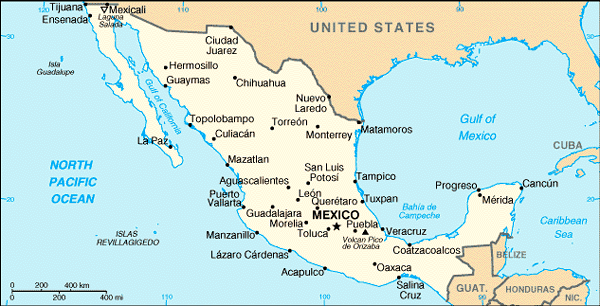
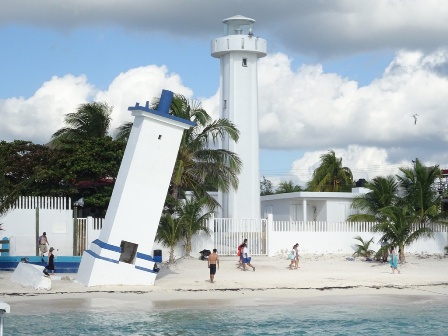
We visit Puerto Morelos because of the beautiful white
coral sand beach. It is not a surfing beach as it is protected by a long coral
reef, about 400 M offshore. Instead, the beach is perfect for swimming and
snorkeling. We follow an established routine for our beach time. We are not
interested in sun bathing. We like to have a long swim, heading for the Ojo de
Agua, an underwater cenote, and using our snorkels to identify the schools of
tropical fish that congregate around the coral rocks about 100 M off shore. If
we are lucky we may encounter a pair of graceful Eagle Rays making their way
through the water and follow a sea turtle as it dives for food in the sea
grasses and surfaces for air. After our swim we head out for a long walk down
the beach, which stretches a few kilometers in either direction, to dry off. We
never got bored of the sights in the ocean and along the beach.
After our walk, we return to our folding beach chairs
that we have placed under the shade of the palm trees, planted a few years ago
at the edge of the beach. There we
meet and chat with a group of friends, who we have met over the past few years.
Maurice Gogol, from Manitoba, rides his bicycle from his apartment in the
Colonia section, while Earl and Flo from Abottsford, BC stay each year in a
condo next to the beach. Yvonne and Bob Temple, from Ottawa, came this year with
their friend Vera, who lives in the same apartment building as the Temples, and
sisters Johanna and Neel, friends of Yvonne’s from the Netherlands.
Three mornings a week, I go to
Yoga classes, run by Patty Davis, in a nice palapa outdoor studio she has built
on the property of the home she lives in year round with her husband and
daughters. When I am at yoga, Ray often goes for a walk exploring all the
streets of town.
A new large grocery store was
a welcome addition to the town. It was a smaller branch of the Chedraui on the
highway that separates the more traditional community, Colonia, from the port
and beach community of PoMo.In
between the two communities is two kilometers of mangrove swamp, home to
crocodiles, water birds, fish and other water animals. The half hour walk is
nice on a cool day, but on warmer days, the local collective bus or a taxi is
preferable. We were glad to be able to buy our food supplies in the more
convenient newer store as well as take advantage of a small Wednesday local
market in the center of town and several other local stores selling fruit
vegetables and fish. We also looked forward to the bi-weekly Saturday organic
market, held at one of the beach restaurants. As well as delicious, freshly made
spring rolls and brats, we could take advantage of the jewelry, art work and
handmade clothing for sale. One young woman sold two piece bathing suits that
were perfect for me.
Every year there are more
excellent restaurants in town. We enjoyed having brunch once a week at El Nicho
and special dinners for Christmas at John Fray’s Kitchen and our Anniversary on
Dec 30 at Tanino’s, owned by Consuelo, daughter of our landlady, Cristina. We
look forward to finding newly opened establishments next year and getting
together with our friends who will be returning to the beach once more.
To read about the rest of our winter in
Mexico and see photos, click one of the following
February in Zihuatanejo
March in
San Miguel de Allende
Visit to
Quéretaro
Return to
Mexico
Intro
Return to
Travels
Return to
Introduction