Ray and Jeanne in Oz
Episode 6: Tassie Tales
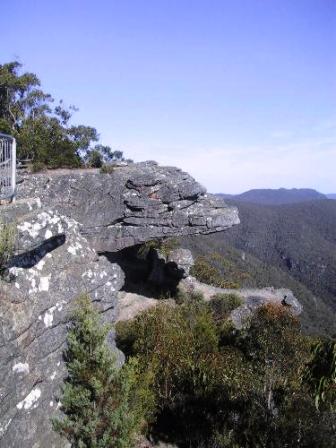
Balcony Rocks in the Grampians
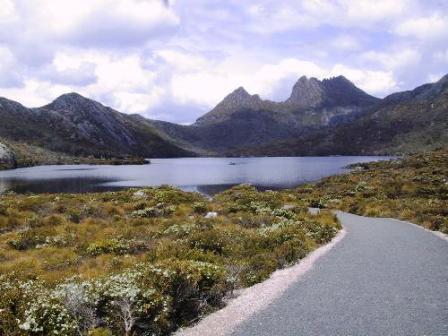
Cradle Mountain from Dove Lake
Read Previous
Of Mice and More Kms
or Next
Alps to the Sea
Monday 9 February
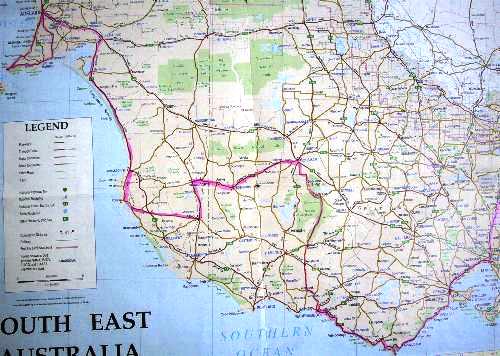
2004, Melbourne, Vic, AustraliaHi everybody, this time
from Melbourne, one of the largest cities in Oz at 3.5
million people. We just arrived Sunday evening on the
boat from Tasmania, so we haven’t seen much of town yet.
We have had mixed weather since you last heard from us
in Adelaide. The weather on the mainland was pleasant and
sunny but that changed in Tassie. The scenery was lovely
but I would advise anyone travelling there to bring full
rain gear and be prepared for cool weather. February and
March are supposed to be the best months with the most
sunshine, but it was in short supply while we were there.
On the mainland we have been using our tent in the
Caravan Parks, with occasional stays in hostels in the
cities. In Tassie, we reversed this because of the
weather and only used the tent four nights out of the two
weeks we were there. That said; we did enjoy our all too
short visit. Two weeks was not enough time. About a month
would be ideal, allowing time to lay low while it rained
and to visit all the scenic spots on the island.
But back to where we last left you, in Adelaide,
enjoying the warmth and hospitality of Carol and Eric
Hobson. Oz’s version to the Tour de France, the Tour Down
Under, started in Adelaide while we were there so of
course we had to watch one stage of the bicycle race. We
had driven up to Mt Lofty in the Adelaide Hills, reputed
to be the best lookout of the area. We passed lots of
bicyclists practicing hill climbing over the more than 10
km of steep roads to the summit. It looked like more of a
challenge than the favourite Gat loop in Ottawa. The
first stage of the Tour Down Under left from downtown
Adelaide and proceeded through the Adelaide Hills,
conveniently located close to our proposed route out of
town. We drove to the small town of
Birdwood where we relaxed with coffee until the racers
appeared. The stores in town decorated the streets with
balloons and streamers and gathered by the roadside to
cheer on the contestants. The first to roar through town
were advance cars with roof top replicas of racers in
their team jerseys. Next came a group of three racers,
one from the Oz team. They had just completed the longest
climb of the day and the day belonged to the best hill
climbers. Almost ten minutes later the main pack of
riders roared through town., followed by a few stragglers.
I don’t know who ultimately won the Tour, but my money
would be on one of the three leaders we saw.
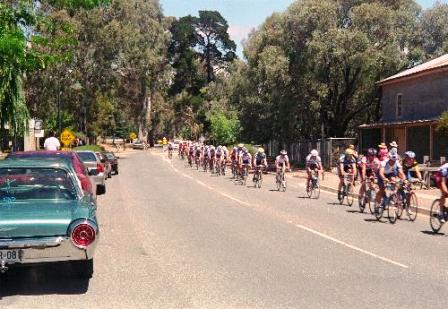
Bicycle race at Birdwood
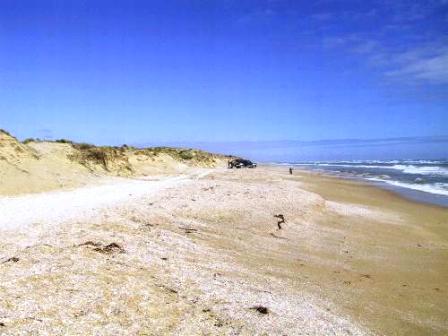
Coorawong Dunes
We left the racers
and headed south to the coast, stopping to walk on the
Coorawong dunes. This long expanse of yellow sand dunes
was less dramatic than the white Sahara sand dunes we
visited at the Eyre Bird Observation. We took a path two
km over the dunes to the ocean where the only people
around was a group of fishermen with long poles stuck in
the sand at the shoreline. Fishing, and this method of
fishing from the shoreline in particular, is perennially
popular in Oz. The most popular vehicle is a 4WD equipped
with fishing pole holders. We walked back via the road
used by the fishermen to reach the beach. We were just
thinking that Priscilla could have driven out on the
track when we hit an extremely soft patch where we
watched one 4WD making several attempts to get up a small
hill on the sandy track. Priscilla would not have been
pleased.
The next day, acting on the recommendations from
fellow campers at our caravan park, we headed for the
Grampian Mountains, but not before taking a wine tasting
tour in the Penola area. There are so many good wine
areas in Oz it is hard to know which ones to concentrate
on. We did manage to try wines from four vineyards in
this area and bought wines to have with our meals in each.
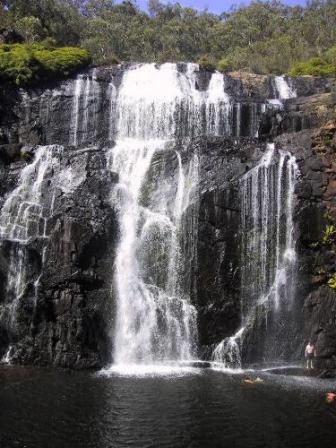
Mackenzie Falls at Halls Gap
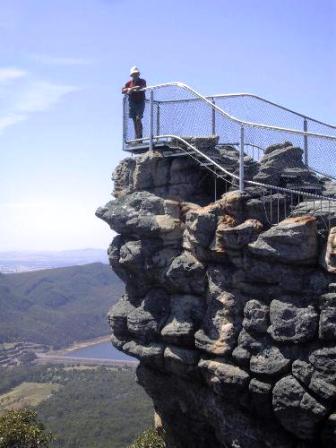
Halls Gap Pinnacle
The Grampians and especially
the main town of Hall’s Gap, where we camped, reminded us
of the Mt Washington area in New Hampshire, except
smaller and not quite so busy. We stopped to admire
Mackenzie Falls, the largest in Victoria with lots of
water running over them, and to admire the rocky cliffs
from the Balconies lookout. We were glad to
have warm sleeping bags as the temperature dropped to 10
C overnight but warmed up beautifully for a four hour
walk the next day. Most of the trail was the best
maintained in Oz with steel railings, steps, and ladders
to ensure your safety. Nevertheless it was a good walk
with lots of lookouts and interesting rock formations, as
well as the requisite snake on the path.
We decided we better make a reservation for the ferry
to Tasmania and found out we could go the next Sunday or
not until a week later on Feb 2. Since our time seems to
be running out, we opted for a Sunday night crossing. We
had hoped to stay in Melbourne before travelling to
Tassie and get tickets to watch the Melbourne Open Tennis
tournament, but there was no time. The booking left just
two days for the Great Ocean Drive so the tennis viewing
would be limited to TV at the caravan park.
The Great Ocean
Drive was worth while, although we would have liked a few
more days in Cape Otway National Park, where we stayed
overnight. The route along the south coast of Victoria is
lined with scenic lookouts, several of which drew us.
There were sheer limestone and sandstone cliffs, deep
gorges and rocky protuberances in the ocean where the
pounding surf had worn the cliffs away. There were also
lots of other tourists. In fact I think every tourist in
Oz was there, especially at the Twelve Apostles. Tour
buses on a day excursion from Melbourne were disgorging
their passengers when we arrived in the afternoon. The
spiky rock stacks were still an impressive sight,
although it was difficult to see all twelve. They were
originally called the Sow and Piglets; the Sow being a
larger rocky island and the piglets the smaller rock
stacks. Sometime in the Victorian era they were given the
more dignified name of the Twelve Apostles.
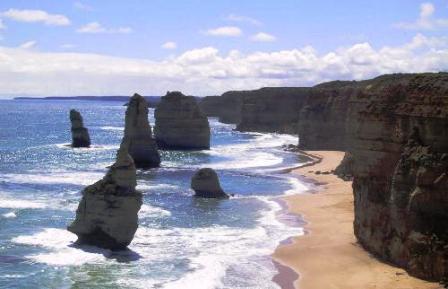
12 Apostles on Great Ocean Drive
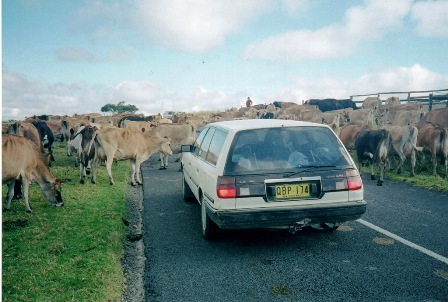
Delayed by the cows
We were delayed
for about half an hour on our way to the Caravan Park on
Cape Otway. People on foot and horseback were
transferring a herd of about 350 cows from one pasture to
another. The cows completely surrounded us on the road,
slowly munching the greenery on the road verges.
The Bimbi Caravan
Park was one of the best we stayed in. It was small and
well kept, plus there were koalas in the trees and an
outdoor theatre offering a free movie, Waking Ned Devine,
that night. The movie, viewed sitting in our camp chairs,
bundled up against the cold, was just as funny the second
time as the first time we saw it in Ottawa. Our only
regret is that we had to leave the next day and missed
good walks to a swimming beach and a lighthouse.
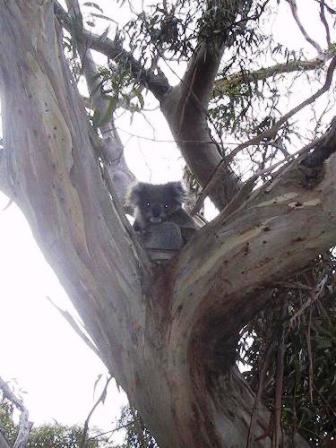
Koala at Bimbi Caravan Park
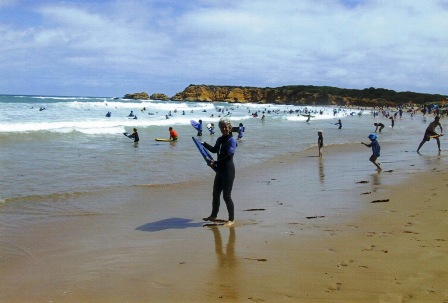
Torquay Beach for Body Surfing
The second half of
the Great Ocean Drive lacked the sheer cliffs of the
first half, but it did have a narrow twisty road high
above the ocean and several inviting white sand beaches.
It was the Aussie Day, a long holiday weekend, and the
tourist towns and beaches along the way were jammed with
visitors. We stopped in one town, Lorne, to have our
coffee break in the sun, then we stopped in Torquay to
watch the windsurfing, sail boarding, and surf boarding.
I couldn’t resist the water and they had wetsuits for
rent to protect me against the cool waters. I had a blast.
Ray decided to veg out on the shore but I rented a suit,
got my boogie board and rode the surf into shore for
almost two hours.
After that we just had time to drive to the docks in
Melbourne and board the Spirit of Tasmania for our
overnight trip to Tasmania. I should have known we would
have problems after our experiences crossing from Western
Oz to South Oz, but I never asked and no one warned us
that you couldn’t bring any fresh fruit or veggies into
Tasmania. We had just bought provisions to last the next
three or four days and it all went into the garbage.
Added to that were the fuel restrictions on the boat. We
had been carrying around a jerry can full of extra petrol
for our trip from Cairns to Alice Springs and we had
never had to use it. Ray filled the car up minutes before
joining the queue for the boat so the 9 liters became a
gift to another passenger. We also had two fuel canisters
for our camp stove that were confiscated, but at least
they return those to you at the end of the trip. Besides
those gripes, the trip was easy. Our inner cabin with
bathroom was compact, but comfortable, as I imagine
cabins on the cruise boats are, and we managed to sleep
most of the way over.
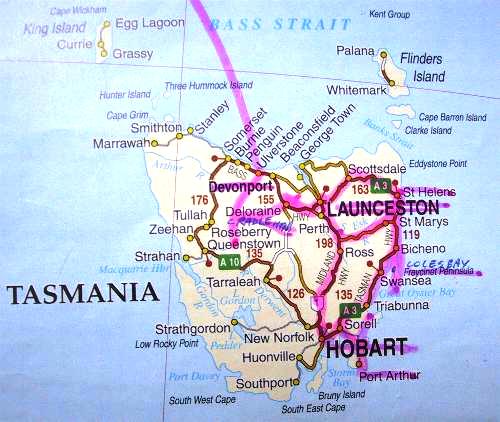
Once we landed in Devonport in Tasmania at 6:30 AM, we
bought groceries to replace our confiscated hoard and
headed to the Cradle Mountains. This is the traditional
starting point for the seven day Overland Track. I had
intended to give it a try but Ray dissuaded me. He was
not keen on carrying a tent, stove, pots and provisions
for seven days. We chose to take day hikes instead. I am
glad we made that decision as the good weather only held
until the day after we arrived in Tassie. That would have
meant six days of hiking and camping in the pouring rain
with no views. Ugh.
We got a good tent site and hustled over to the Park
information center for a two hour walk in the sun around
Dove Lake. New boardwalks have been constructed to make
it easier for people to enjoy short walks and a frequent
shuttle bus is available to transport people from the
info center to several locations in the park. The drivers
are all friendly and provide a short commentary on the
area as you drive around. On the way back from our hike
the first afternoon the driver pointed out a wombat
peacefully grazing by the side of the road near the Park
headquarters. He let four of us out and we rushed over to
take photos of the oblivious furry creature. They look
sort of like a koala with short stubby legs and no big
black nose. One of the drivers told us about his
experiences raising an abandoned baby wombat. They look
slow and lazy but he claimed they could outrun Cathy
Freeman, the Aussie Olympic winner. His wombat, Wally,
was trained to use the toilet and loved to sleep on their
furniture. He had to be returned to the wild when he got
too big to keep inside but managed to claw through a
wooden door when they tried to put him out at night.
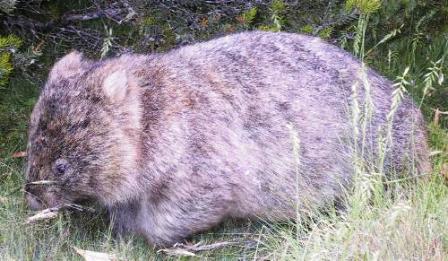
wombat grazes beside the road
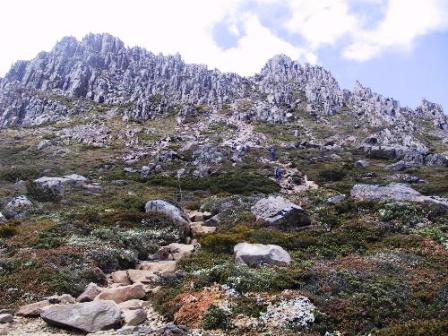
path on Cradle Mountain walk
Dove Lake is nestled below Cradle Mountain and
surrounded by smaller hills, so we had a pleasant warm up
to our longer walk the next day. Again we circled Dove
Lake, but this time from farther out. We walked around
several other alpine lakes and climbed to the top of one
of the smaller mountains surrounding Dove Lake to
Marian’s Lookout for a great view of the area. At the end
of Dove Lake is the start of a side trip to the 1545 M
Cradle Mountain peak. A sign at the
start of the trail advertised 2 1/2 hrs for the return
trip, and with a half hour rest at the top, we needed all
that time. It was a challenge, but well worth the effort.
The climb reminded us of several of the rock hopping
trails we have followed in the White Mountains of NH, but
we really had no problems and going down wasn’t half as
difficult as Ray feared. The 360 view at the top was
wonderful, especially given the rare clear skies. Down at
the trail junction again, we still had another two hours
or more of hiking to get back to our start.
Near the junction we met up with a man who wanted
directions to the Peak Trail. We told him how long it
took us to go up and that it was challenging, but he was
still keen. We wondered about the wisdom of going up as
it was already after 3 PM, the sky was clouding over and
he had no water, no warm clothing and was wearing sandals.
Some people have to learn the hard way.
We hustled on our way and made it back to our shuttle
bus just in time for the rain to start. Luckily we only
got slightly damp and we had raincoats with us, but I was
more concerned for our clean laundry already dry on the
outside lines at the campground. We managed to retrieve
it before it was absolutely soaked and got it dried in
the drying machine, so we had something to change into
after our shower.
That was the end of our sunshine for quite some time.
The rain went on in earnest all night long. We had a mud
lake surrounding our tent but we were comfortable inside.
Many of the campers suffered from leaking tents but we
thought we had escaped until I discovered the underside
of my thermarest was wet. The center seam on the tent
floor was leaking. That did it. The rain stopped long
enough for us to scrub the mud off the tent, pack up and
leave for Launceston.
We gave up on
tenting and stayed overnight in an on-site caravan in
Launceston. All the literature told us to head for the
East Coast when the weather was bad in the west so that
is what we did the next morning. It was still raining but
we took a road over two mountain passes to get to St
Helen’s. We got within 14 km of St Helen’s when a
barricade across the whole road stopped us. We had passed
over small flooded sections of the road beforehand, but
this was impassable. We would even be heavily fined if we
attempted it. We turned around and headed for lunch and
to assess our options in a nearby roadhouse. There
weren’t any. Six and a half hours after we left in the
morning we were back in an on-site caravan in Launceston.
There were no other unflooded roads to St Helen’s. In
fact, the main street in town was under water and
everyone in town was stranded for a few days.
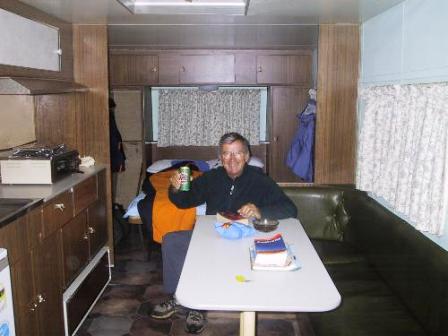
Caravan for the night
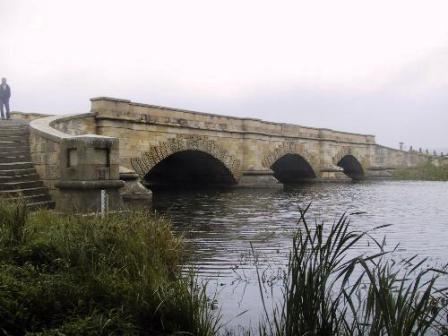
Ross Bridge
We changed our plans and
headed south to Hobart, with side trips to the historic
towns of Ross and Richmond. Like many of the towns in
Tassie, these were convict stations. Many of the original
stone buildings and bridges, built with convict labour,
have been retained and restored. The towns are now
popular tourist destinations with good restaurants and
gift shops. The convict past has become a good tourist
draw in Tassie.
We stayed at a nice hostel in Hobart and used the
rainy weather as an excuse to watch the finals of the
Melbourne Open tennis tournament. I don’t think I have
watched as much good tennis before. It made me keen to
get back on the courts when I return to Ottawa.
The rain did stop
long enough for a nice walk on Mt Wellington. We ended up
walking in low cloud so we never did see the advertised
spectacular Organ Pipes, dolomite rock formations at the
top of the mountain, but the temperature was good for
walking. At one point we followed a side trail that ended
in dense bush. That was a mistake. I had been thinking it
was just about warm enough to take off the zip-off legs
of my hiking pants, but I delayed doing so. Shortly after
I noticed a black blob on Ray’s calf. It was a leech,
getting fat on his blood. He managed to flick it off and
then discovered a leech on my pant leg. It was still
skinny as was protected by my long pants. I stayed in
long pants for the afternoon. I would still recommend the
walk!
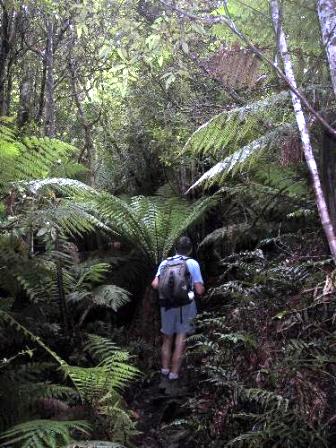
Mt Wellington walk
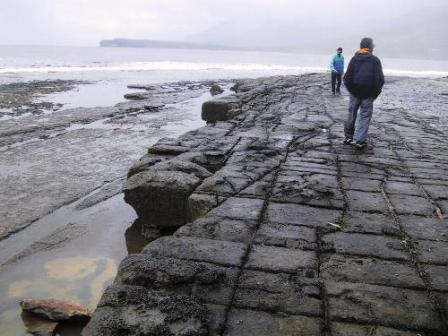
Unusual tessallated rocks near Port
Arthur
Port Arthur, on
the nearby Tasman Peninsula, is a must on any Tassie
tourist list. It can be done as a day tour from Hobart
but it is much better as an overnight trip. We drove
there in more rain and stopped on the way to see the
unusual shoreline rock formations called the Tessellated
Pavement. It looks like a cobblestone patio someone has
constructed on the beach, but is the result of several
underground upheavals of the sea bottom and subsequent
erosion by the sea, the tides and the salt.
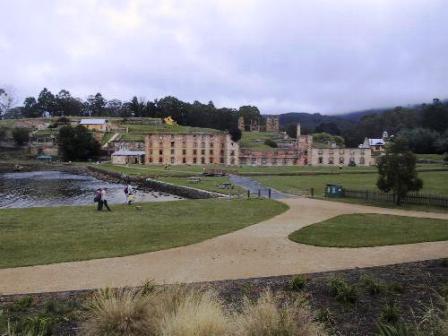
Port Arthur Penal Station
We didn’t get any
promised views of the Tasman Peninsula as we continued on
but the skies had cleared for an afternoon visit of the
Port Arthur historic site. This was a Penal Station from
1830 – 1877 for male convicts who were considered
dangerous or repeat offenders. There was also a juvenile
detention center on adjacent Point Puer for boys from 9
to 16 years old. This was the first time that boys were
separated from adult prisoners in the English
Commonwealth. Conditions were harsh by today’s standards,
but not for that era. The prisoners endured hard physical
labour but they were learning trades and if they could
stay awake in the evening, had access to a large library
and some education. Most did eventually finish their
terms, but very few of them ever made it back to England,
so many Tassies can trace their roots to a convict. As we
heard in later conversations with Tassies, this is just
beginning to be acceptable. There is a computer database
at Port Arthur where you can put in a name of a person or
town and get a list of a convict. With that information
you can write to the genealogical society to get more
information about an ancestor.
The Port Arthur site was once a thriving town but once
the prisons were closed in 1877, the buildings were
subject to fires and vandalism. Although only a few of
the original buildings survive or have been restored,
there is plenty to see on the site. We took a boat tour
of the bay and a short guided walk to learn more about
its past. We also spent a few more hours just wandering
around reading the informative signs by the buildings.
The colony was self sufficient with shipbuilding, coal
mining, shoe making, brick and nail production. Religion
was thought to heal the troubled soul, so church
attendance was mandatory. The most disturbing building
was the Hall of Silence. As a punishment, prisoners were
kept in isolated cells where no one talked to them and
they wore heavy masks to isolate them further. It is no
wonder that the number of inmates sent to the
subsequently constructed madhouse rose dramatically.
The next day was still good, so a walk in nearby
Fortescue Bay was in order. We had hoped to do a walk to
see the Totem rocks at the end of Cape Raul but recent
bush fires had forced the track closure. The rains had
halted the fires but the tracks had not been repaired and
there was a danger that trees or tree limbs would fall on
us. We met a Dutch couple who had gone on the walk anyway
and said it was awful. Everything was burnt and one
section had lots of leeches. We did a nice coastal walk
instead and even saw several penguins nestled under rocks
or tree stumps beside the trail.
With the change to good weather, at least during the
day, we headed to the Freycinet Peninsula to try out
another walk. The Freycinet is a long skinny lick of land
a little farther north on the East Coast. The craggy
topped Hazard Mountains crown the end and sandy beaches
line both sides of the peninsula. The weather was even
good enough for us to try tenting again. The Caravan Park
at Coles Bay was crowded, but well equipped with a
camper’s kitchen and convenient to swimming and hiking
trails.
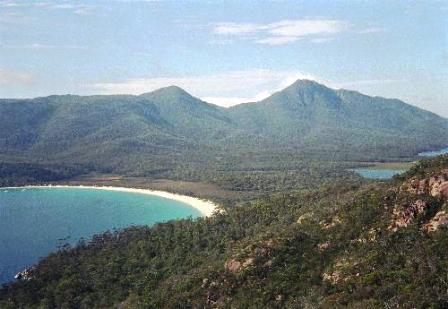
Wineglass Bay
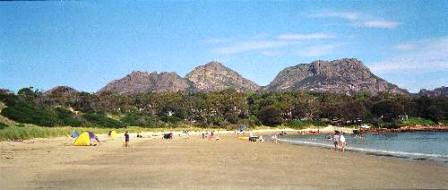
Coles Bay Beach
We set out in sunny weather
for a five hour loop hike. We climber up to a pass
between the Hazard mountains for a glimpse of the lovely
Wineglass Bay, a white crescent of sand backed by green
forests. We got down to the beach in time to watch a pod
of eight or more dolphins swim back and forth along the
shoreline. Several people were sunbathing on the beach
but few were in the water for very long as the waters
were cool. We continued our hike through the forest to
Hazard Bay on the other side of the peninsula. We had time to try to
identify more birds on the route, have a picnic lunch on
the rocks, walk two hours back to the campsite tent and
have a swim at the beach nearest to the Caravan Park. The
water was cool but we managed a short swim and a walk
down the beach. It was quite relaxing.
Bicheno is a small resort town at the head of the
Freycinet peninsula. We stopped there on our way further
north, intending to have a walk through the hills of
another National Park. It sounded like a longer walk than
we wanted so we settled for a coastal walk along the
rocks right in Bicheno. The rock hopping got to us
somewhat but it was pretty along the coast. We were just
deciding to drive a bit further north before stopping for
lunch when we saw those familiar black clouds hovering
over the hills. We lunched in Bicheno and were glad we
hadn’t gone into the hills to get drenched.
That afternoon we made it to St Helen’s, a week later
than we expected. The weather looked too threatening for
a tent so it was an on-site caravan again. They are
really quite comfortable with their own kitchen, but you
have to go outside to the amenities block for a shower or
the toilet.
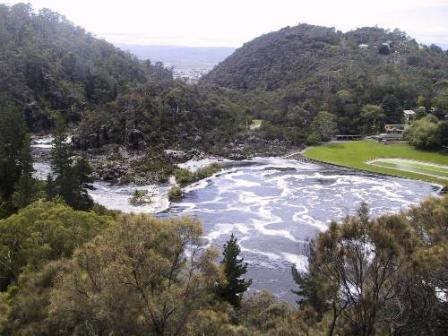
Launston Cataract Gorge
The next day was our last in
Tassie. We headed back to Launceston by a different route
than our aborted one the week before. We had heard good
reports of the Cataract Gorge so off we went. This is a
popular spot for both tourists and locals and since this
was a sunny Saturday, many family groups were out. There
is a large swimming pool on the grounds, but it was
closed due to the recent heavy rains. From the look of
it, it needed to be drained and refilled. You have a
choice of crossing the gorge on a chair lift or walking
across a suspension bridge. In the middle of the heavy
rains the previous week the suspension bridge was closed
for fear it would be swept away, but it was fine now.
We opted for a walk from the suspension bridge to Duck
Reach power station, two km upstream. Nearly everybody
else sticks close to the suspension bridge area so we
almost had the place to ourselves. The power station was
built in 1885 using the latest in technology to provide
power to the bustling town of Launceston. When it was
completed it was the first in Tassie and one of the
earliest in Oz. Floods in 1926 destroyed much of the
station. The station was rebuilt, then destroyed again in
the 1960s. This time it remained closed until it was
reopened as a tourist attraction in the 1980s. We found a
different route for the return trip, through the forest
instead of beside the gorge. A very nice half day walk.
After our picnic lunch we continued on to Devonport
where we got a room in a converted nurse’s residence for
our last night in Tassie. It was just like staying in a
college residence but you couldn’t beat the price and the
people were friendly. At $30 it was the best value room
in Oz.
Sunday morning we took the day ferry back to Melbourne.
It was a relaxing day, sitting in comfortable chairs,
reading, watching some Davis Cup matches on TV and
playing cards. The ten hour trip passed quickly.
In Melbourne we are staying at a YHA hostel in North
Melbourne. We left Tassie in the rain and it has cleared
nicely on the mainland. Ray walked downtown this morning
to explore while I wrote this latest episode.
We will stay in town another day to explore some more
and then it is off again. We are coming to end of our
trip, just one month more in Oz. We have invitations to
stay with people in Wagga Wagga, Canberra, Sydney and we
hope to take them all up on their offers.
Return to
Australia Intro
Return to
Travels
Return to
Introduction