On The Gringo Trail
Episode 8: South to the Incas
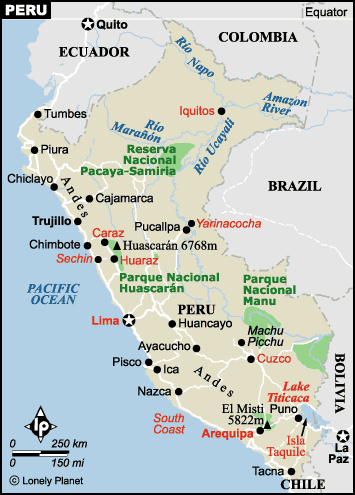
Click
the map above
to see a photo album of Sipan and Cusco. Close the window to return to
this page
Read Previous
Igor and Friends
or Next
Machu Picchu and Back
Page 2 of 2
Thursday March 6,
2003 Cusco, Peru
Continued from Page 1
We took the bus the next day across the border to Peru
and stayed overnight in Piura. It was a much easier
border crossing than our previous one through Tumbes,
Peru. We were on a through bus and just had to present
ourselves to the Ecuador border post to get stamped out,
walk across a bridge and get stamped into Peru.
Piura was just an overnight stop as we were headed for
Chiclayo, on the coast. We had heard good reports of pre-Inca
archaeological finds in the area and decided it was worth
a visit. Jessica and Jonathan, who had travelled with us
from Cuenca to Vilcabamba were also interested in going.
They had taken the overnight bus from Vilcabamba, so we
arranged to meet up at a hostel in Chiclayo. Four others,
Dave and Caroline, whom we had met in Cuenca, a German
girl, Ursula, and an American girl, Amy, had been on the
night bus. They all wanted to visit the archaeological
sites, so once in Chiclayo, we made arrangements for a
tour.
Early the next morning we boarded a minibus to see the
the grave site of the Lord of Sipan and the temple ruins
of Tucume. We were lucky in our guides. Julio, who spoke
only Spanish, was involved with the first discoveries of
Sipan in 1987, so he was very knowledgeable. The Sipan
discoveries, grave sites of the Moche peoples who
inhabited the region 1700 years ago, have been written up
in National Geographic, but I don’t know which issue. A
young lady, Patricia, was sent along as our English
interpreter. She tried hard, but her English was still at
the beginner level so I eventually found it easier to
listen to Julio, whose Spanish was easier to understand.

Guide on top left with our tour group
to Lord of Sipan

tomb of Lord of Sipan
Fourteen graves
have been uncovered in Sipan, about 30 Km southeast of
Chiclayo. The most famous is a warrior priest called the
Lord of Sipan. He was covered with sumptuous gold and
silver ornaments and buried 12 M below the surface under
a pyramid structure. Accompanying him in death were two
guards, a principal wife, concubines, a dog and a llama.
The guards were prevented from running off in the
afterlife by having their feet cut off. Surrounding the
bodies were hundreds of clay pots, most in the shape of
squat little men, containing offerings of gold or food.
Another grave contained the
body of an older man, thought to be the grandfather of
the Lord of Sipan. He carried with him into death even
more elaborate gold ornaments. The area all around
Chiclayo is a desert, so the dry air plus the care in
which the graves were constructed helped to preserve the
bodies. There is still a lot of work to do to complete
the archaeological studies but money has run out. Several
of the artefacts uncovered are on display in the US and
Europe, hoping to create interest in continuing the work.

towmb of an elder in Sipan

Tucume pyramids
We drove back through Chiclayo and 30 Km north to
visit Tucume. Three large
pyramids were built in the desert by the Lambayeque
people between 1200 AD and 1500 AD. The pyramids housed a
large residential area, food storage areas and temples.
Just part of it has been uncovered and reconstructed. We
climbed up steps leading to the top of a natural hill
that was used as a temple and celestial observatory by
the Lambayeque. From the top we could get a better
impression of the layout of the pyramids. It must have
resembled the Egyptian pyramids in its prime.
After a good lunch in a restaurant in the town of
Lambayeque, 11 Km north of Chiclayo, we visited the new
Museo Tumbes Reales de Sipan. It has only been open for
two months and concentrates on the finds from the Sipan
tombs. It was very well done and gave more meaning to
what we had seen at the site. You can go through the
exhibits on your own but we were lucky enough to have
Julio with us. He soon attracted a small crowd of locals
who were visiting the museum. He certainly added to the
descriptions provided with the displays.
The next day we had a flight to Lima. It didn’t leave
until the early evening so we had time to visit the local
market which was supposed to have a Witches section. Ray
and I, Jessica and Caroline set out to find it that
morning. The market was huge and we attracted quite a bit
of attention as we were the only gringos around. In fact,
we saw very few other gringo tourists in Chiclayo. The
sites in the area haven’t become popular yet.

dried iguanas for herbal remedies in
Witches section of Chiclayo market
The vendors were friendly and interested in where we
were from. Caroline spoke quite good Spanish so she
struck up several conversations with the vendors. We had
to ask for directions several times but eventually we
found the Witches section. The
main products sold in the booths are herbal remedies, but
they also have such exotic items as deer hooves, dried
iguanas, snake skins, a bear paw and ocelot pelts.
Several of them brought out from behind their booths what
they claimed were genuine Moche artefacts for sale. We
had read in our guidebook that this illicit sale of
artefacts should not be encouraged, and some of them
looked like the real thing. I ended up buying a small
stone whistle, which I am sure is a reproduction.
We flew to Lima that evening and got a room in a
hostel in the safe and friendly Miraflores section of
town. Lima does not have a reputation as a very safe city.
That was illustrated to us on the taxi ride from the
airport. A truck with a load of soft drinks was driving
along the expressway beside us when a van pulled along
side the truck. Someone in the van reached out and
grabbed a case of pop off the truck before a helper,
riding on top of the truck could react. Luckily we were
safe inside the cab.
We had one day in Lima. Just enough time to visit one
of the Museums in town. The Museo de la Nacion was
recommended to us so we took a taxi there the next
morning. We hired an English speaking guide to show us
around the Anthropological displays of the cultures in
Peru from the stone age to the Incas in the 15th century.
We got a quick overview of the rich civilizations that
existed in this part of the world. When our guide had
finished we had time to do the tour in reverse to fill in
the gaps we missed the first time through.
While Ray rested in the lobby of the museum, I made a
quick tour of a display of “Popular Art”. Many
of the artwork we have seen for sale in markets. There
were gaily coloured crosses, miniature street scenes, a
display of hats from various towns and dolls dressed in
regional costumes.
After that tour we deserved a good lunch. We took a
taxi back to Miraflores and ate in a Cevicheria, a
seafood restaurant. There are lots of restaurants to
choose from in Miraflores. They serve good food but they
are a bit on the pricier side. That goes with the upscale
neighbourhood.

lovely Cusco plaza
The next morning
we flew to Cusco, our last stop before flying home from
Lima. The town and the environs are “must see”
destinations for most tourists to Peru, but that also
brings our the street vendors in force. We have never
been subjected to so many sales pitches in one place as
we were in Cusco. So far we have managed to stay polite,
but it gets a bit tiresome. Besides that, Cusco is a very
attractive town with many Colonial era churches and
buildings plus plenty of Inca ruins nearby. I only wish
it were a bit sunnier and warmer. March is still in the
throes of the rainy season and none of the buildings have
heating. Thank goodness lots of blankets are provided in
our hostel. We need them.
We took a bus tour of the Sacred Valley. It is so
named because it follows a river sacred to the Incas from
Cusco all the way to Machu Picchu. Our guide, Seraphina,
was excellent. She imparted a
wealth of information on the legends and history of the
Incas, medicinal plants growing alongside the road and
archaeological information. Ray was pleased as our time
in the market towns along the way was limited to 20
minute walk through. That made for more time in the Inca
sites, but I still managed to pick up a few souvenirs. I
have to come home with something for our four months away!

Inca Calendar signs on rug to take
home for our home

Ollantaytambo Temple in Sacred Valley
Although the
Incas ruled the area for just one century, they built up
an impressive empire. They had an advanced system of
agriculture with terraces on the hills, built with gravel
drainage systems and strong walls to prevent erosion on
the hillside. The first Inca site we visited was Pisaq,
with storage area for grain, a temple and thousands of
burial sites in the limestone cliffs. Ollantaytambo was a
temple area constructed with huge granite blocks that
were transported over specially built ramps from the
quarry several Km away. Our last stop was to see a
colonial church built over Inca foundations at Chinchero.
The Spaniards chose that site to convince the natives
that conversion to Catholicism was not that big a leap.
It worked.
There are several more sites in around the city of
Cusco that we plan to explore today. Then tomorrow
morning we will start our four day hike to Machu Picchu.
We are madly doing a sun dance every day to keep the rain
away. At least the weather seems to be moderating. We are
looking forward to our walk in the mountains and have
been assured that our tents will be very good. We pray
that is true!
Back to Episode 8: Page 1
Return to
Travels
Return to
Introduction